Flying back home from Frankfurt, today. Met these two German lads who are coming to the US on holy pilgrimage. They are headed to Lambeau Field for a Packers game. Cheeseheads are a worldwide fraternity.
Go Pack go!
People, like novels, have themes.
Our Stories

Flying back home from Frankfurt, today. Met these two German lads who are coming to the US on holy pilgrimage. They are headed to Lambeau Field for a Packers game. Cheeseheads are a worldwide fraternity.
Go Pack go!
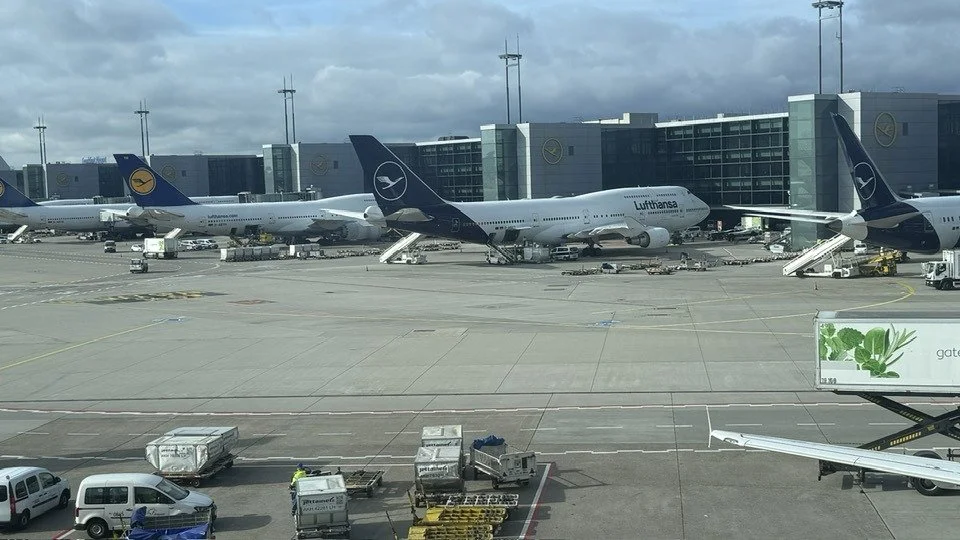
Lufthansa Boeing 747-8 passenger planes parked in a row at the airport.
Here we go again. Yes, those are Boeing 747 passenger jets out there—a whole row of them. Currently, Germany’s Lufthansa is the world’s largest operator of these iconic old birds, keeping the “Queen of the Skies” alive in an era of twin-engine efficiency. (The other three carriers that still use these for passengers are Air China, Korean Air, and Rossiya Airlines.)
Did you know the original 747-100 was introduced way back in 1969? Boeing manufactured more than 1,500 of these jets over five decades. However, the era of the four-engine giant is fading; All American carriers officially abandoned the jumbo line in 2017.
I’m guessing Lufthansa keeps them alive for a variety of reasons. The 747’s high yield cabins maximize passenger numbers for long hauls. Its large belly bay means revenue is measured in freight as well as in passengers. And Lufthansa’s experience in developing specialized tooling and expertise means they can maintain their fleet via its subsidiary, Lufthansa Technik, without outsourcing. Those are all good reasons to stick with what they’ve got.
Today, only a few dozen 747s remain in service as passenger planes. The rest of the fleet has been scrapped or converted into freighters. Some have even more unusual second lives—like the Jumbo Stay Hotel at the Stockholm Arlanda Airport, where you can actually spend the night in a converted 747-212B. Personally, I can’t imagine it. After years of writhing in economy on long-haul flights, I would never choose to willingly sleep on a 747!
“Once I get you up there, where the air is rarefied
We'll just glide, starry-eyed
Once I get you up there, I'll be holding you so near
You may hear all angels cheer because we're together.”
Lyrics from “Come Fly with Me” by Sammy Cahn

Laugenstange kümmelbraten and kraut before 8:00 am will put hair on your chest. These folk in Frankfurt make pretty fair coffee too.
I pity the person sitting next to me on the next flight.
However, as my dear friend Dr Scott Caulley noted, the person sitting next to me probably ate two.
Was the Apostle Paul ever in a Roman amphitheater?
We visit the Roman Amphitheater at Trier, Germany, part of a UNESCO World Heritage Site.
The Roman Germanic Museum in Köln (Cologne) has some fascinating artifacts.
The history of Cologne goes back to the New Testament age.
The Romans knew about a people and a land called Gaul.
The brilliance of Roman engineering is on display in the throne room of Constantine the Great.
Mark arrivers in Trier.and stops for a German-style breakfast.
Goodbye Germany! You will stick to my ribs!

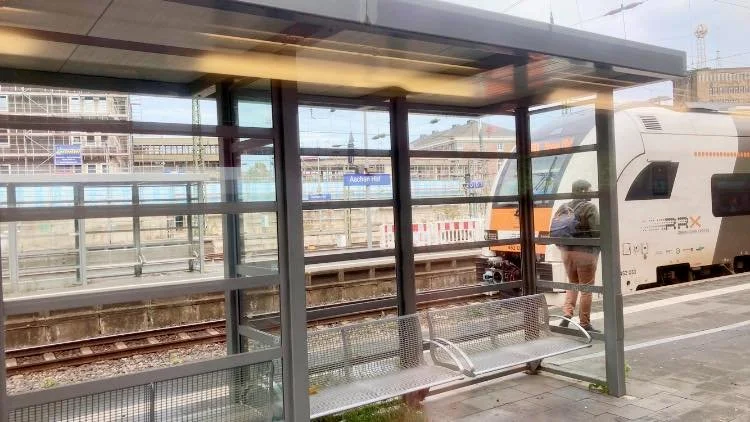
Aachen, Germany. Burial place of Charlemagne and bloody memory site from WW2.
Despite this train station pix, it’s really quite beautiful here. The city seems to be nestled into rolling forested hills. Hints of orange and yellow suggest autumn is in the air.
The geography is a bit more robust than what we’ve experienced in Belgium.
Look what my daughter found in the lot of her mechanic in Köln, Germany. I just love that girl.


You don’t have to go all the way to Germany or Saudi Arabia to find a sweet ride. Sometimes they are right around the corner. See here.
The awful happened.
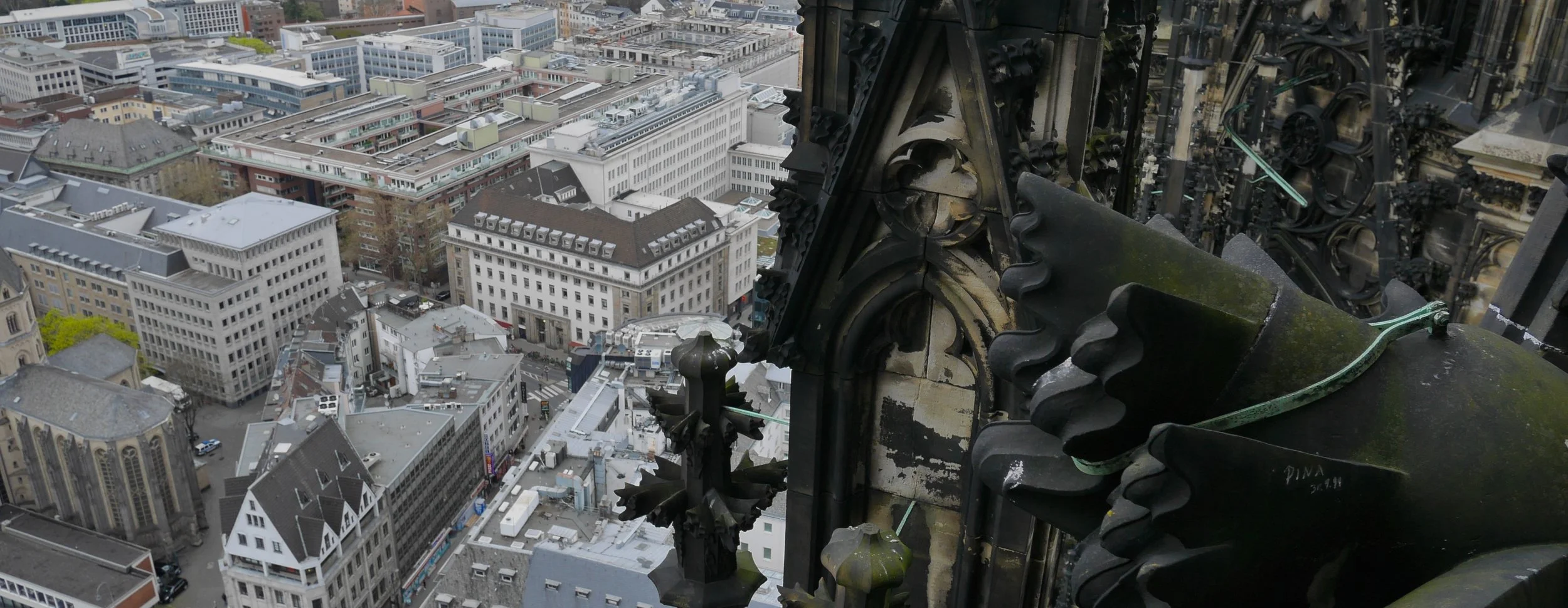
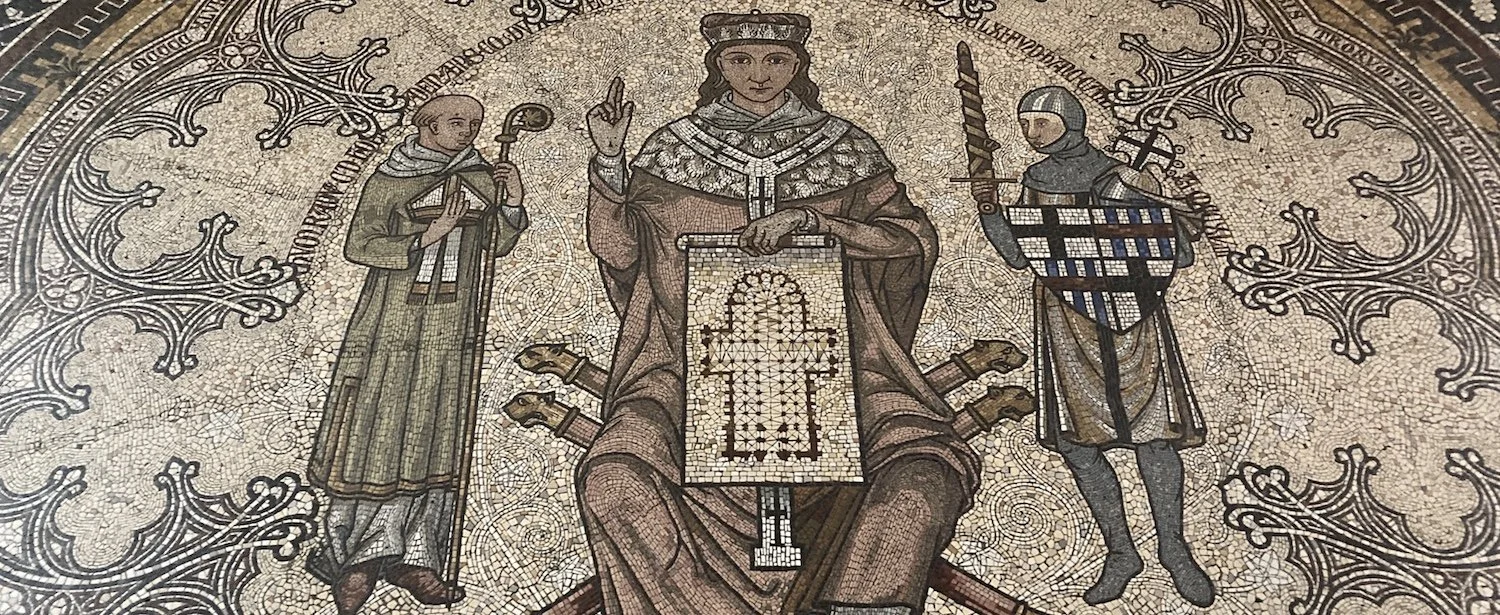
Work on the Köln (Cologne) Cathedral sputtered and stalled. After 300 years of labor, this “structure of hope” outpaced its resources. It was unfinished, unfunded, and unroofed in places. The 25-meter wooden Domkran was idle atop of the South Steeple, an arm with no muscle. To make matters worse, the archives (read: building plans) were lost to French revolutionaries in 1794. The vision of a grand cathedral, conceived in the middle of the 13th century, was all but lost.
For those who are curious about the landscape of the biblical world, the Rhine River may seem to be a stretch, a reach, a foul ball. The Rhine (Grk Ρήνος, Lat Rhenus) is an unlikely entry in a Bible dictionary or atlas. It is unrecognized in the biblical text. And yet, this waterway and those who peopled its banks were known in the New Testament world, more by reputation than experience.
I sat with Moriah and Peter in a 160-year-old restaurant in Köln known as Brauerei zur Malzmühle. While we chewed crispy pork knuckle, grilled pork belly, and raw minced pork (do you smell a theme here?), a local family settled into a stained wooden table adjacent to ours. Somehow we stood out as foreigners and became a subject of their whispered conversation.