Exploring Italy

Would you like fries with that?

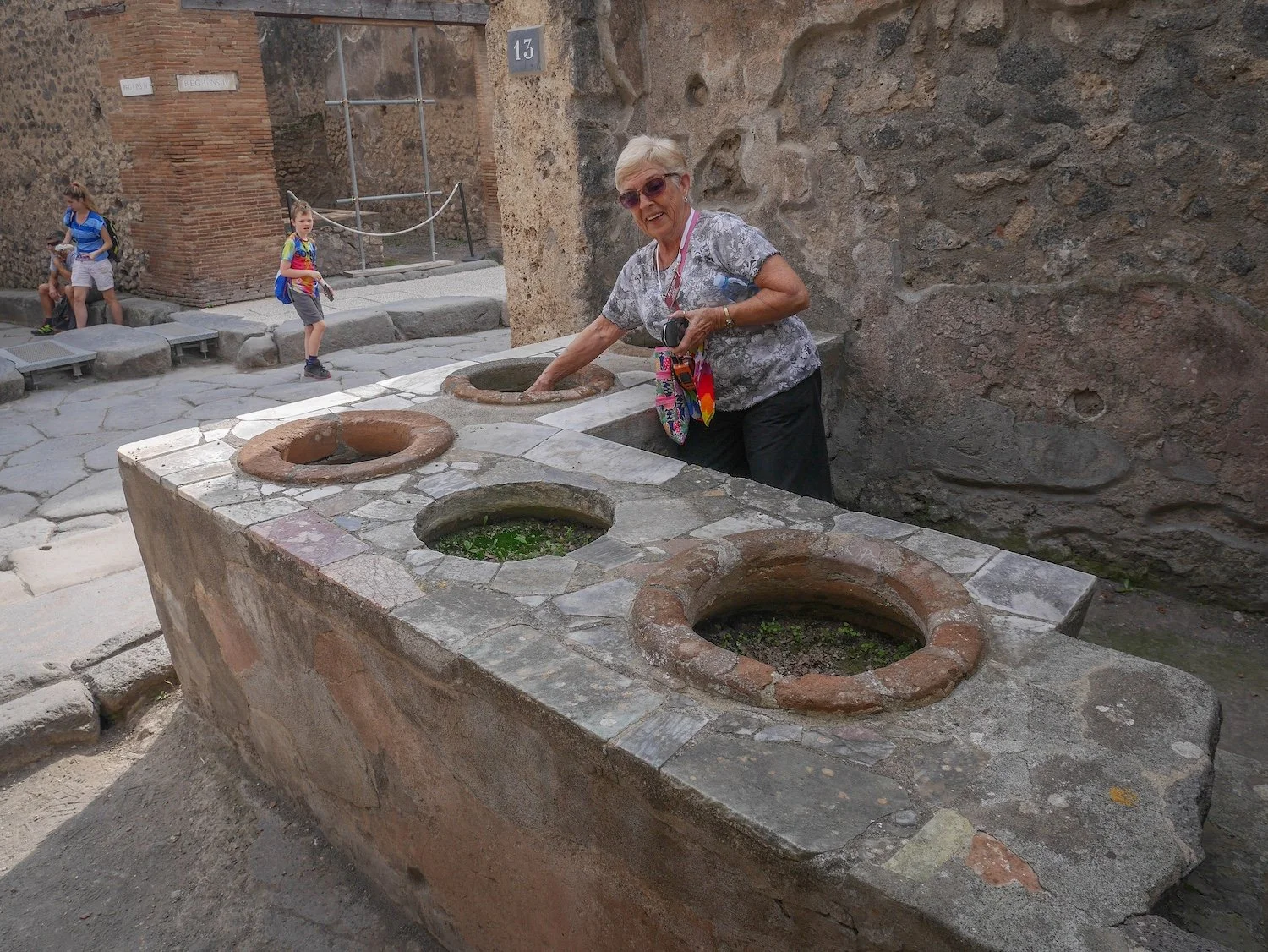
If you’re hungry and hunting fast food along the streets of Pompei (and you happen to be around before the volcano smothered the town in AD 79), you might swing by a thermopolium (Greek for “cook-shop”). Pray the line is short.

“L” shaped food counters like this one faced the street and featured built-in clay jars. The jars were filled with food and drink, kept warm by the terracotta. Hearty stews and soups (consisting of pork, seafood, goat, and snails) could be purchased as a entrée, with sides of bread, cheese, and nuts. Of course, no good Mediterranean meal would be complete without condiments, and there was no finer dipping sauce than a pungent garum (made from fish mash).
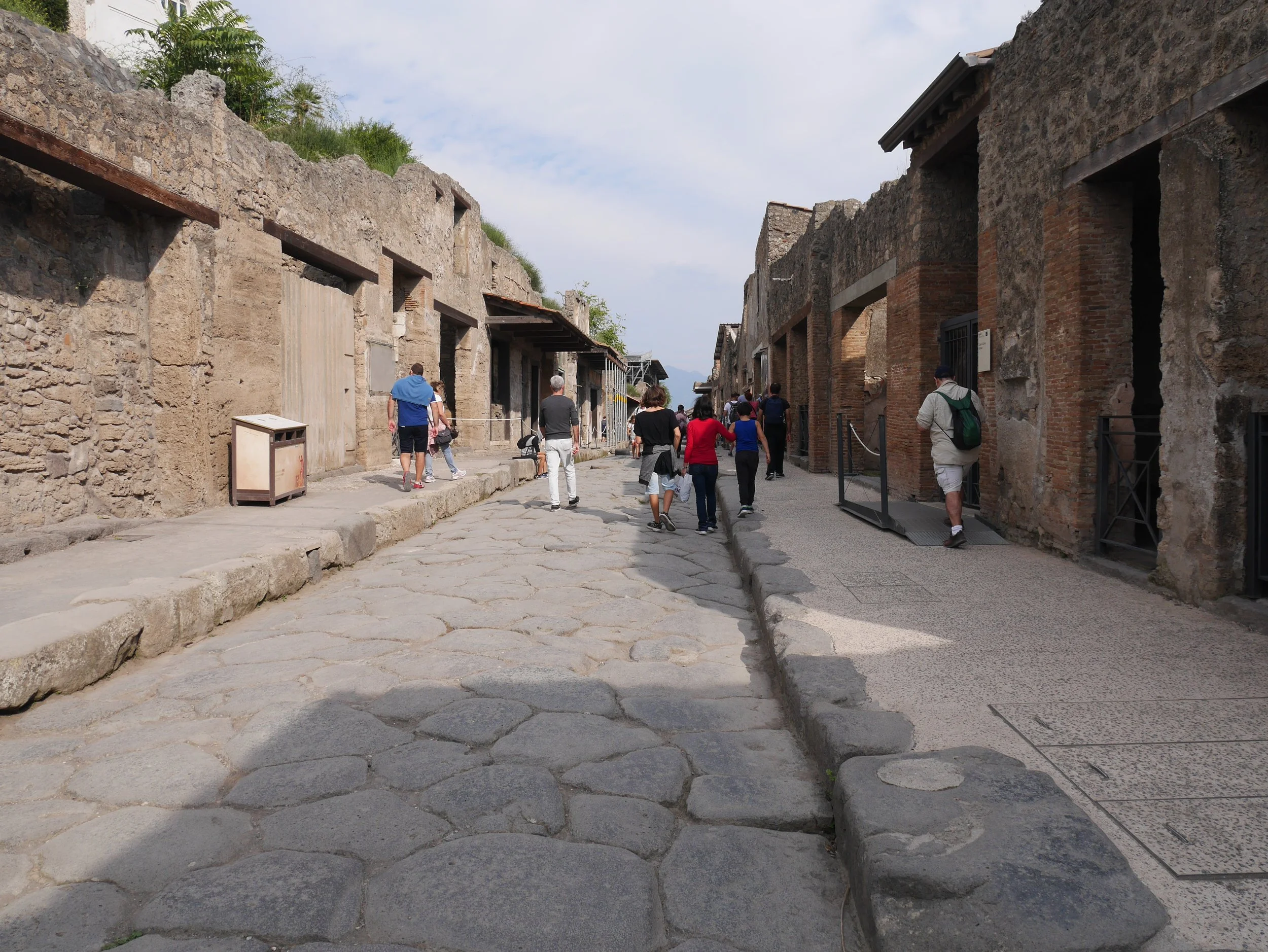
A well-preserved street in Pompei.

In urban areas of the New Testament world, many residential apartments (insulae) lacked cooking facilities. Meals could purchased for take-away in places like this—and incidentally, the more well-to-do residents scorned the thermopolia. Scoff if you will, McDonald’s-haters; more than 150 soup counters were found here, suggesting that take-away was a lively industry.

Try to imagine the aroma wafting down the street on a cool winter evening.

Do you think the Apostle Paul ever asked for extra cheese?

Linda Baines, one of our Bible Land Explorers, slipped behind the counter to stir the pot, a role she relishes.

We have a couple of Italy trips on tap this year and next. Here’s a link to one that has open seats right now. Will you join us?
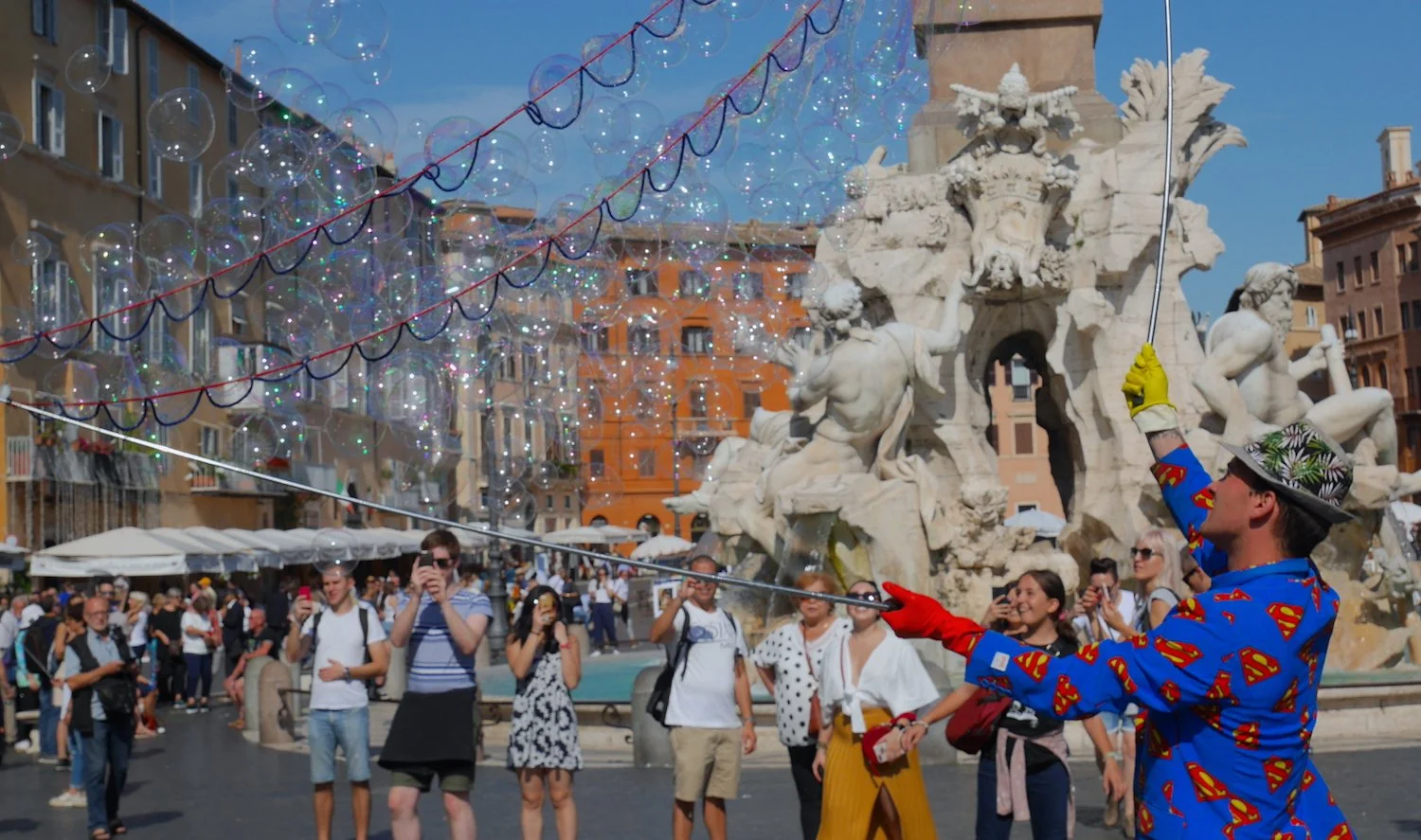
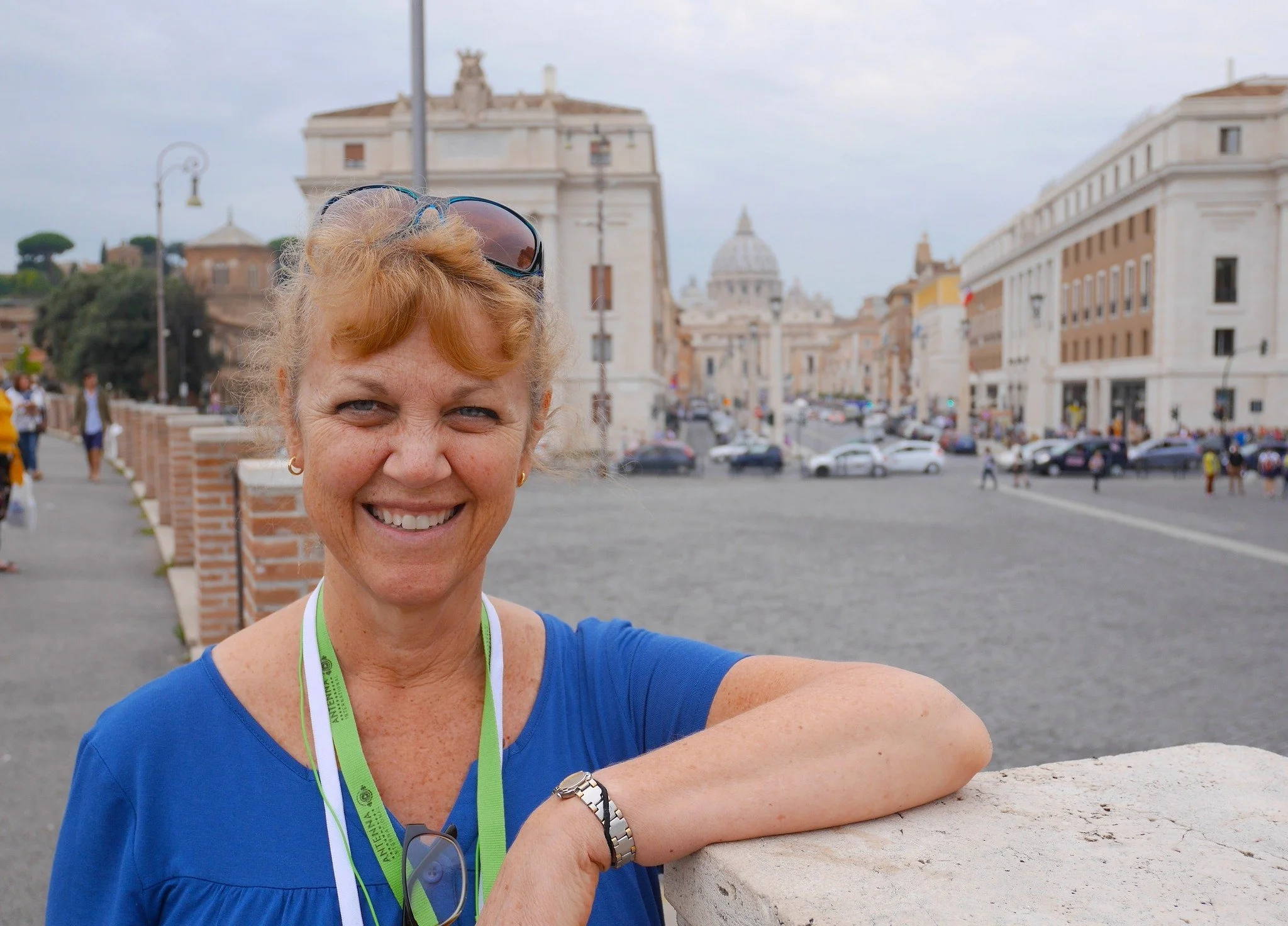
It's a spectacular party!

The Piazza Navona in downtown Rome is a place of spectacle (and has been for a long time).

Today it is a public space for shopping, eating, and relaxation.

In the 17th century, it was a showcase of Baroque art with impressive pieces still on display (note Bernini’s “Fountain of the Four Rivers” behind the bubble-maker in the photo above).

In the first century the public square was the location of the Stadium of Domitian, a sports stadium called the Circus Agonalis.

Consider this your invitation to join us in Rome in the coming year. We’ll be there twice. The first occasion will be part of a land-only tour of the peninsula that starts in Venice and ends in Pompeii. Dates are May 28-June 6. To learn more, see the link here. The second occasion will be a pre-trip connected to an Aegean Cruise, October 22-November 3. Again, here’s the link.

These trips will be party and then some. We aim to highlight New Testament World connections all along the way.

Italy in 2026

Bible Land Explorer is headed back to the Vatican in 2026. The visit will be part of our "Taste of Italy" tour that will sample the cuisine, art, history and archaeology of the peninsula. Venice, Florence, Assisi, Rome, and Pompeii are among our stops. Consider joining us, May 28-June 6, 2026. For details, see the link here: https://www.jcbs.org/tours/jx26052826z62606

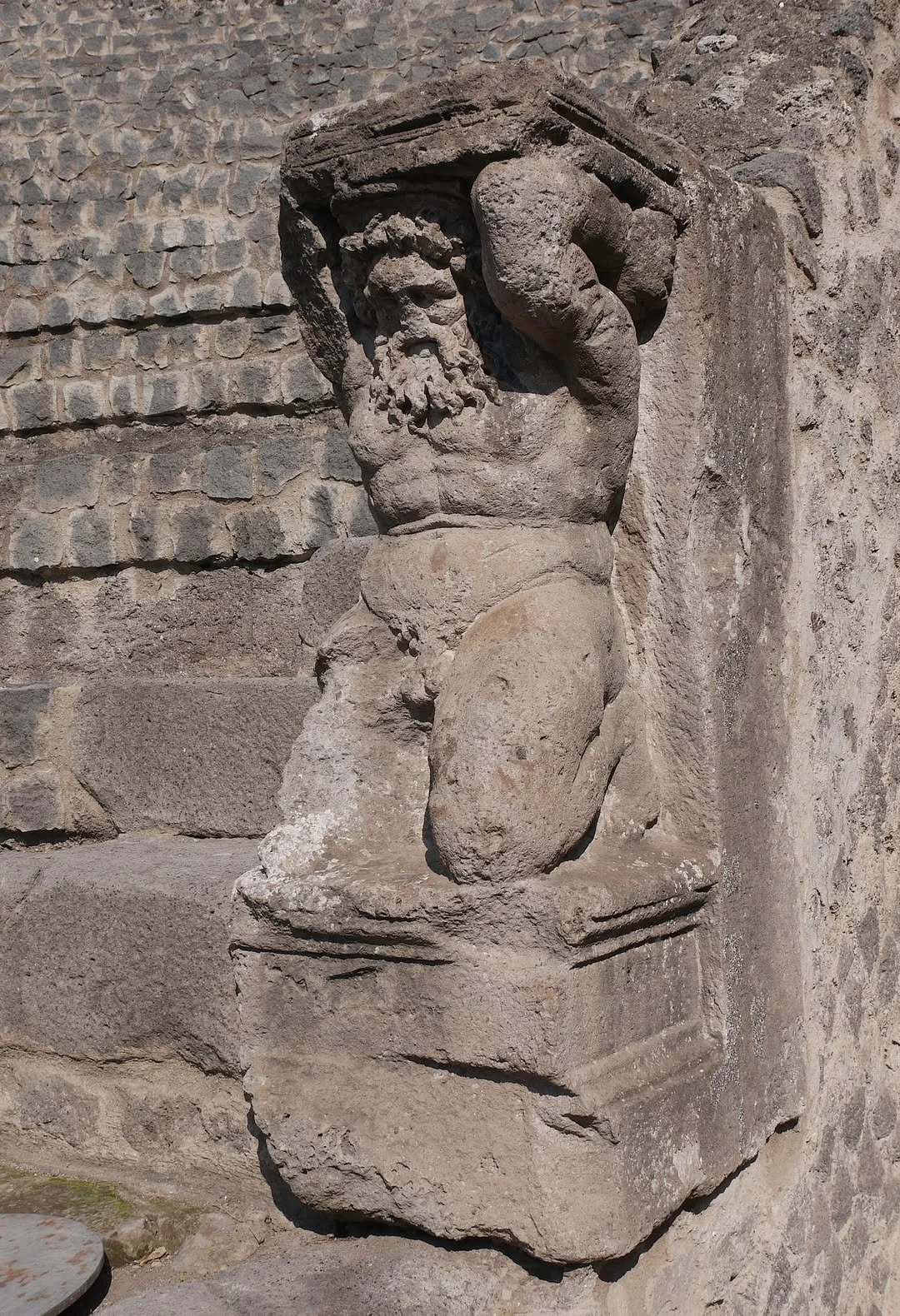
Atlas Shrugged

Kneeling Atlas from the odeon ("The Little Theater") in Pompeii, Italy. This entertainment venue was built in the first century BC and destroyed in the first century AD. Pompeii--and its odeon--was enveloped in several meters of ash when Mt Vesuvius erupted in AD 79.

If seeing the well-preserved wonders of Pompeii are of interest to you, you should consider joining us as we return for a taste of Italy next year. See the link here for details.