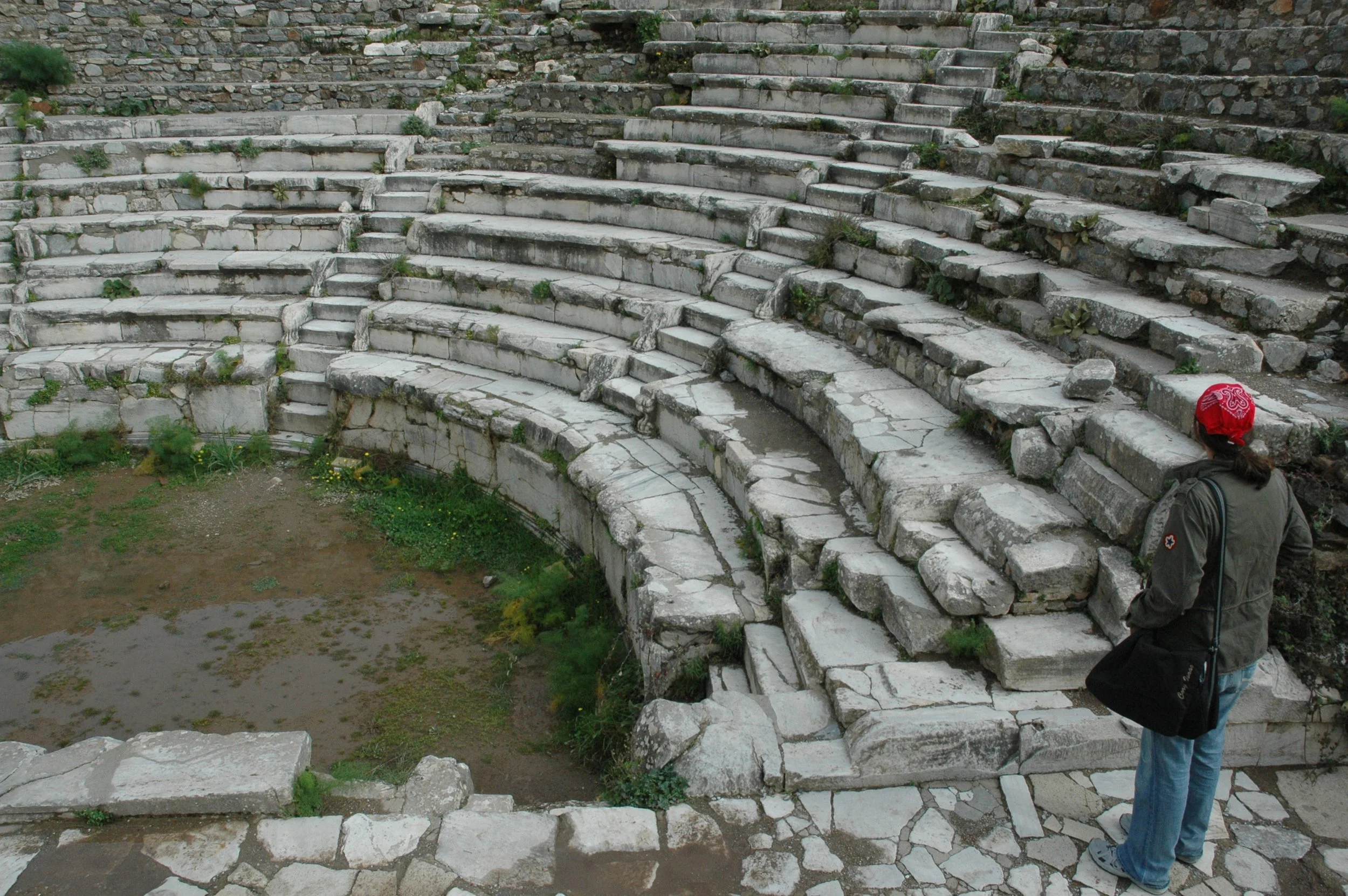
The well-preserved stone seating of the Odeon at Ephesus, Türkiye.
Theater or Odeon: What’s the difference?
A “little theater” is found in Ephesus and other urban areas of the classical Mediterranean world. It is often a freestanding structure (not built into a hillside), U-shaped, but has less seating than a theater. This reduced scale offered a more intimate environment. The "little theater" was designed for musical performances, lectures, or recitals.
Such a structure is called an odeon (ōideion). The label is Greek, prompted by the verb aeidō, meaning "I sing” — or “hoot,” “howl,” or “croak.” (I guess one man’s meat is another man’s poison!)
Want superior sound? add a roof
Apart from their diminutive size, the other feature that separates the odeon from the theater is the roof. Whereas theaters were open to the sky or shaded with tarps, odeons had solid, wooden roofs that produced superior acoustics. Unfortunately, organic materials rarely survive the ravages of time.
Pictured above is an odeon found at the site of Ephesus, in Western Türkiye.
Visiting the Odeon at Ephesus with Bible Land Explorer
We’re heading back to the odeon in Ephesus this fall on our Apostle Paul Mediterranean Cruise. Will you "sing, howl, or croak" with us? Click here for the brochure or email us here with your questions.
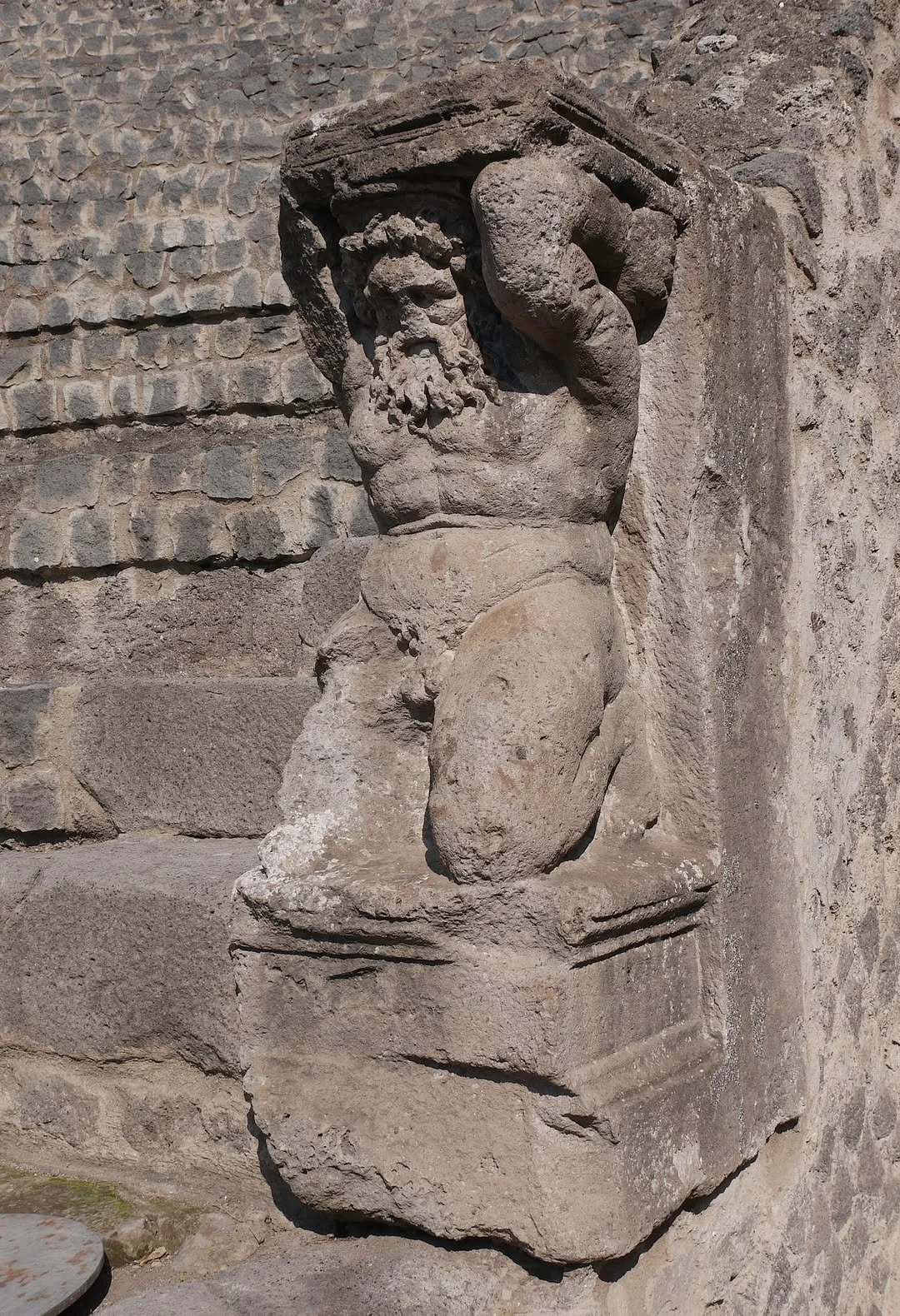
Want to read more? Have a look at one feature of the odeon at Pompeii, Italy. Follow the link here.